
TL;DR:
- SMP offers a persistent, evolving world with economies, factions, and community events.
- Proper server setup, including plugin management and optimization, is essential for performance.
- Community engagement and storytelling are key to long-term SMP success.
Most players think they're getting the full Minecraft experience when they fire up a solo survival world or hop into a basic server with friends. They're not. Single-player worlds and standard multiplayer barely scratch the surface of what Minecraft can truly offer. Survival Multiplayer, or SMP, creates something entirely different: a persistent, player-driven world that evolves over time, complete with working economies, rival factions, community events, and land protection systems. If you've ever logged into a server and felt like you were stepping into a living, breathing world rather than just a game session, that's SMP doing its job. This guide breaks down exactly what makes SMP mechanics so powerful and how you can use them to their full potential.
Table of Contents
- What is SMP? The evolution from single player to shared worlds
- Core mechanics of SMP: Community, economy, and protection
- Behind the scenes: Plugins, server setup, and performance
- Risk, reward, and edge cases: SMP pitfalls and PvP strategies
- Why most players underestimate SMP's power
- Ready to elevate your SMP experience?
- Frequently asked questions
Key Takeaways
| Point | Details |
|---|---|
| SMP reshapes Minecraft | SMP turns Minecraft into a lasting, social experience with economies, land protection, and custom events. |
| Creative mechanics matter | Plugins and world rules allow server owners to design experiences that go far beyond vanilla gameplay. |
| Smart setup prevents problems | Optimizing plugins and server settings is key to handling more players and preventing griefing. |
| Risks can be managed | Trust and protection systems make a major difference in handling SMP’s potential pitfalls like griefing and lag. |
What is SMP? The evolution from single player to shared worlds
Now that you see the potential of Minecraft beyond typical modes, let's pinpoint what truly makes SMP stand apart.
Understanding what is Minecraft SMP starts with recognizing that SMP is not just "multiplayer survival." The term stands for Survival Multiplayer, but the mechanics behind it represent a completely different style of play. When you load up a standard survival world, everything revolves around your own progress. You gather resources, you build your base, you fight your mobs. Nothing carries weight beyond your personal session. SMP flips that entirely. Every action you take exists within a shared, persistent world where other players see your work, interact with your builds, and respond to your decisions in real time, even hours after you've logged off.
The difference becomes clear when you compare modes side by side.
| Feature | Single player | Basic multiplayer | SMP |
|---|---|---|---|
| Persistent world | Yes (solo) | Sometimes | Always |
| Player-driven economy | No | Rarely | Core feature |
| Land claiming | No | No | Standard |
| Community events | No | No | Regular |
| Grief protection | No | No | Plugin-enforced |
| Ranks and progression | No | No | Common |
| Shared storyline | No | No | Emergent |
Basic multiplayer, like a Realms world shared between a few friends, gives you shared access to a world. But it lacks the structured systems that make SMP feel like a genuine community. There are no ranks to earn, no economies to trade in, and no enforced land protections to keep your builds safe from other players. SMP adds all of those layers systematically.
According to one detailed SMP overview, SMP enhances gameplay through social interaction, community-driven economies, land claiming to prevent griefing, custom events, and plugins for teleportation, quests, and ranks, differentiating it from single-player or other multiplayer modes by emphasizing shared progression and persistent worlds. That's a serious list of features, and each one reshapes how players engage with the game.
Here's what genuinely sets SMP apart from anything else in Minecraft:
- Persistent world: The world exists whether you're online or not. Cities grow, markets shift, and relationships evolve in real time.
- Player-driven economies: Players set prices, run shops, and control market supply through in-game currency systems.
- Land claiming: Dedicated protection zones prevent other players from destroying or stealing from your builds.
- Custom events: Server-run events like PvP tournaments, treasure hunts, and build competitions keep the world dynamic.
- Ranks and quests: Progression systems beyond vanilla give players long-term goals and community status to work toward.
- Teleportation plugins: Quality-of-life tools like /home and /warp make navigating large shared worlds manageable.
SMP also rewires what players consider a "goal." In single player, the endgame is usually defeating the Ender Dragon and collecting gear. In SMP, the endgame is often becoming the wealthiest trader on the server, founding the largest town, or running the most influential faction. The social layer transforms Minecraft into something much closer to an MMO, or massively multiplayer online game, than a standalone survival experience. That shift in mindset is what makes SMP communities so sticky and long-lasting. Players aren't just chasing objectives; they're building legacies. And there are excellent multiplayer mods for social play that can amplify this experience even further.
Core mechanics of SMP: Community, economy, and protection
Having established the distinct nature of SMP, let's look at how its defining mechanics and systems actually play out on real servers.
Land claiming is often the first system new SMP players encounter, and for good reason. Without it, a creative builder can spend hours crafting a detailed base only to log in the next day and find it destroyed. Grief prevention plugins solve this by letting players stake out chunks of terrain that only they and their trusted allies can modify. The most widely used tool for this is GriefPrevention, which assigns players a pool of claim blocks that grow over time with playtime. This rewards long-term engagement and creates a natural sense of ownership over the world. It's a simple mechanic that changes the entire emotional investment players have in their builds.
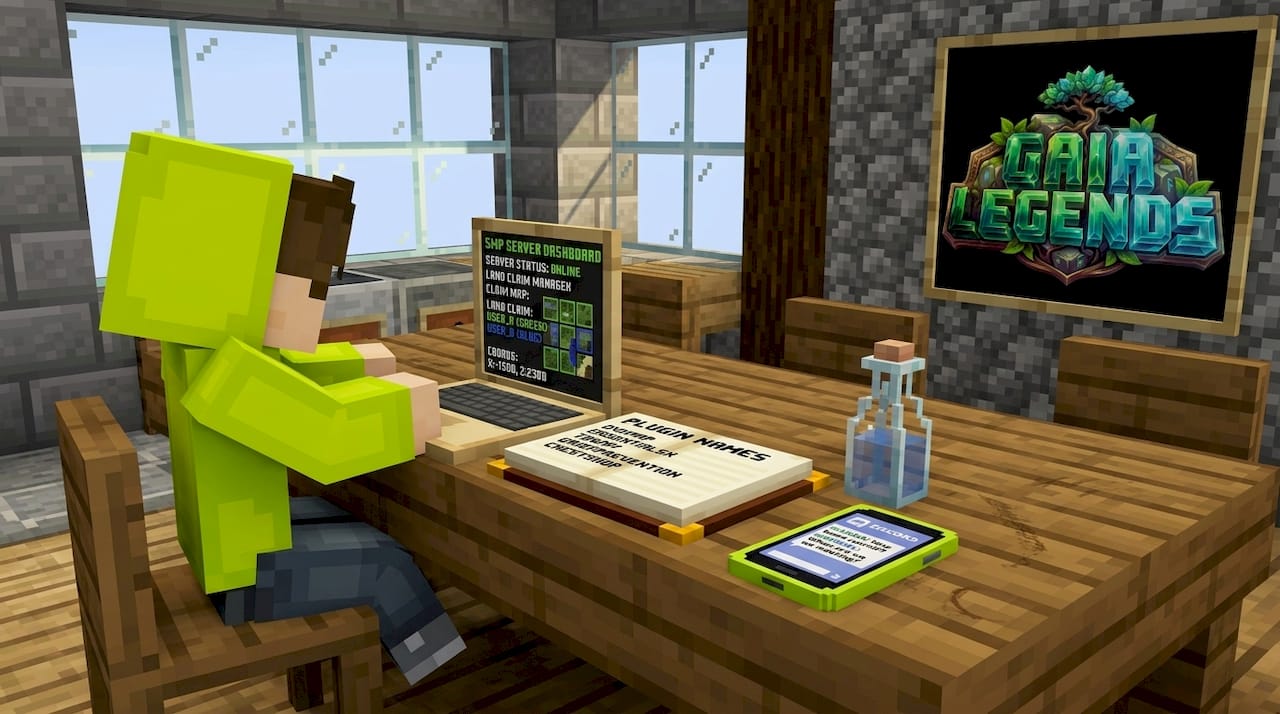
The economic layer is where SMP gets genuinely exciting. Most servers run a player economy through a chest shop system, where anyone can set up a physical storefront anywhere in the world. Prices are not fixed; they're set by the players themselves, which means real market dynamics emerge. If diamonds flood the server after a big mining event, prices drop. If a building contest drives demand for wool, prices spike. Knowing the best items to sell on SMP can mean the difference between scraping by and becoming the server's top merchant. We've seen players on our 200-player server build entire in-game empires just by mastering trade timing.
As highlighted in one SMP guide, SMP enhances gameplay through social interaction, community-driven economies, land claiming, custom events, and plugins for teleportation, quests, and ranks. Each of those pillars supports the others. A vibrant economy draws players together, which fills up community events, which builds the social bonds that keep people logging in.
Servers with active economies and regular community events retain players significantly longer than those relying on vanilla progression alone. Players aren't just farming diamonds; they're investing in a world they helped shape.
Ranks and quests add a layer of structured progression that vanilla Minecraft simply doesn't have. When a player earns a new rank by completing challenges or accumulating playtime, it signals to the entire community that they've invested in the server. It's a public recognition system. Quests give newer players a direction when the open-world freedom of Minecraft feels overwhelming. Together, these systems create a welcoming entry point and a clear long-term trajectory for dedicated players. Knowing how to approach building a thriving Minecraft community means understanding that these mechanics are not optional extras; they're the backbone of player retention.
Here are the core mechanics that every well-run SMP should have in place:
- GriefPrevention or CoreProtect: For land claims and rollback ability after any grief incident
- EssentialsX: For basic commands like /home, /tpa, and /spawn that make the server navigable
- Vault and an economy plugin: To run a currency system and connect it to chest shops
- LuckPerms: For tiered rank management and permission control
- A chat plugin: To enable both local and global chat channels that build community interaction
- A quests plugin: To guide new players and reward long-term ones with structured goals
Pro Tip: Don't launch your SMP with every plugin you think you need. Start with the five core systems above, run your server for a few weeks, then add plugins based on what your players are actually requesting. Over-plugin launches are one of the most common reasons new servers lose momentum fast.
Behind the scenes: Plugins, server setup, and performance
With an understanding of SMP's game-changing features, it's crucial to see how server setup and plugin choice enable these experiences.
Most SMP servers run on either Spigot or Paper, two server platforms that support plugin-based customization. Paper is the clear frontrunner in 2026 because it includes aggressive performance patches on top of Spigot's foundation. Choosing Paper as your base is the single highest-impact decision you'll make as a server admin before you even touch a plugin. It processes game ticks faster and handles player-heavy loads far more gracefully than vanilla server software.
Essential Minecraft performance mods and server plugins work together to keep your server running smoothly. The core plugin stack for a successful SMP includes EssentialsX for quality-of-life commands, GriefPrevention for land protection, and LuckPerms for granular permission management. As confirmed by detailed plugin setup research, server owners use plugins like EssentialsX, GriefPrevention, and LuckPerms on Spigot or Paper for mechanics including /home, land claims, and permissions, with optimization involving Paper server software, reducing view distance to 6 to 8 chunks, pregenerating chunks with Chunky, and limiting mobs to maintain 20 TPS with 50 or more players.
Here's the optimized setup sequence we recommend for any SMP server targeting 50 or more concurrent players:
- Install Paper: Replace vanilla server software with the latest stable Paper build for your Minecraft version.
- Set view distance to 6 to 8: This is the most direct way to reduce server load. Players rarely need to see beyond 8 chunks in a community setting.
- Run Chunky for chunk pre-generation: Pre-generate at least a 5,000-block radius around your spawn before opening to players. This eliminates the server lag spike that comes from generating new terrain during peak hours.
- Configure mob limits: Reduce monster spawn caps in your bukkit.yml from the vanilla default of 70 to around 50. This keeps mob farms from choking the server.
- Add your core plugins one at a time: Install and test each plugin before adding the next. This makes troubleshooting much easier when conflicts arise.
- Enable timings or Spark profiler: Use the Spark plugin to monitor exactly which tasks are consuming your server's processing resources so you can target your optimizations precisely.
The real-world performance difference between an optimized Paper server and an unoptimized vanilla setup is dramatic. Benchmark data shows that an optimized Paper SMP achieves a stable 20 TPS at 50 players with view distance set to 6 to 8, mob limits applied, and chunks pre-generated, while unoptimized vanilla servers begin struggling at just 15 players.
| Setup type | Players supported | Stable TPS | Chunk gen lag | Mob limit |
|---|---|---|---|---|
| Optimized Paper SMP | 50+ | 20 TPS | None (pre-gen) | 50 monsters |
| Unoptimized Paper | 25 to 30 | 17 to 19 TPS | Moderate | Default (70) |
| Vanilla server | Up to 15 | 15 to 18 TPS | Significant | Default (70) |
| Vanilla (20+ players) | Struggling | Below 15 TPS | Severe | Default (70) |
TPS, or ticks per second, is the heartbeat of your Minecraft server. The game runs at 20 TPS when everything is healthy. Drop below 18 and players notice the sluggishness. Drop below 15 and the experience becomes genuinely unpleasant. Keeping TPS at a consistent 20 is the target every server admin should chase. For players, understanding TPS helps you recognize when lag is a server issue versus a personal connection issue. If you're also seeing frame rate drops on your own machine, check out ways to improve Minecraft FPS alongside server-side fixes.
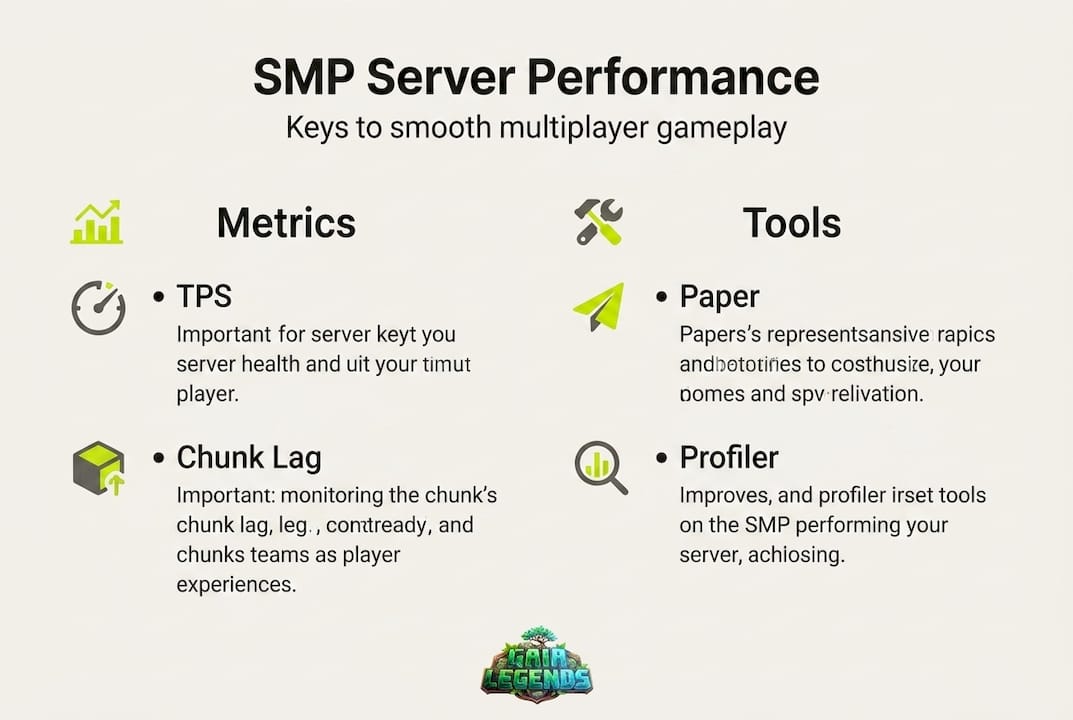
Pro Tip: Use the Spark profiler plugin on your Paper server and run a timing report during your busiest hour of the day. The report will show you exactly which plugins or game processes are eating the most resources. This is always more useful than guessing at optimizations blindly.
Risk, reward, and edge cases: SMP pitfalls and PvP strategies
Equipped with server setup know-how, it's time to confront the challenges and advanced strategies that define long-term SMP engagement.
SMP is genuinely exciting, but it comes with real risks that every player and server admin needs to understand going in. Ignoring them is one of the fastest ways to watch a promising server fall apart within a few months.
The most common pitfalls in SMP environments include:
- Griefing on trust-based servers: Vanilla SMP without plugins relies entirely on player honesty. One bad actor can devastate weeks of community progress.
- Performance degradation from plugin conflicts: Adding too many poorly coded plugins creates memory leaks and TPS drops that worsen as the player count grows.
- Rule-bending and exploitation: Smart players will always find gaps in your server rules or plugin configurations. Clear, detailed rules and active moderation are non-negotiable.
- Admin burnout: Running an SMP is demanding work. Servers without a distributed moderation team often collapse when the main admin steps away.
- Economy inflation: Without a way for currency to leave the system (taxes, item sinks, shop fees), the in-game economy can hyperinflate and make early game meaningless.
The choice between a trust-based vanilla SMP and a plugin-protected SMP is more nuanced than it first appears. Vanilla SMP has a strong romantic appeal. It feels raw and genuine, and many of the most famous Minecraft series, like the original Dream SMP, ran on trust alone. But that model works because those servers had tightly controlled whitelists and strong social contracts. As SMP edge case analysis confirms, vanilla SMP carries high griefing risk, plugin-heavy SMPs risk lag from poor optimization, and PvP settings vary from fully disabled to fully enabled, with competitive SMP strategies including high-ground positioning and sprint-hit combinations.
The biggest misconception new server admins carry is that more plugins automatically means more protection. In reality, every plugin you add is another potential source of lag, conflict, and exploits. Fewer, well-chosen plugins almost always beat a bloated stack.
PvP rules are another area where SMP servers vary wildly, and your choice shapes the entire player culture. Here's a breakdown of the main PvP approaches and their strategic implications:
- PvP disabled: Completely safe servers focused on building and economy. Low conflict, high creativity, great for younger communities.
- Opt-in PvP zones: Designated areas like arenas or the Nether where PvP is enabled. Balances safety and excitement.
- Full PvP enabled: High-stakes, high-tension servers where any player interaction could turn dangerous. Encourages strategic alliances and hardcore SMP strategies.
- Faction PvP: Organized team-vs-team conflict with territory control. Creates the most complex social dynamics and emergent stories.
For players on full PvP servers, the sprint-hit mechanic is foundational. Sprinting into a hit delivers a knockback bonus that can push opponents off ledges or create distance for a follow-up. Holding the high ground matters because falling deals additional damage from impact. And armor enchantments like Protection IV and Feather Falling IV are the difference between surviving an ambush and respawning with empty pockets.
Why most players underestimate SMP's power
Here's the perspective we've developed after running a 200-player SMP and watching dozens of other servers thrive and collapse: most players and even most admins still think of SMP as "multiplayer Minecraft with some plugins." That framing sells the mode completely short.
The real power of SMP is narrative. When your server has a working economy, land claims, faction systems, and active events, players don't just play the game together; they create stories together. We've seen players on our server form trade alliances, wage political campaigns to take over community projects, and even establish server-wide holidays around major build completions. None of that was scripted. It emerged organically from the mechanics being in place.
The misconception that SMP is primarily a survival mode also causes admins to underprioritize community events. Events are not a luxury feature; they are the engine that creates memories and keeps players invested. A well-run Minecraft server event doesn't just fill a Saturday afternoon; it gives players something to talk about for weeks and a reason to log in the following weekend.
The servers that thrive long-term are the ones that treat SMP as a platform for social design, not just a game mode. They invest in community mechanics, moderation culture, and player storytelling. The ones that fail almost always focus on adding more plugins or better hardware while neglecting the human side entirely.
Pro Tip: Survey your players every 30 days with a simple three-question form: What's your favorite part of the server? What frustrates you most? What's one feature you'd add? The answers will guide your development better than any trend article ever could.
Ready to elevate your SMP experience?
With a fresh perspective on SMP's potential, those ready to transform their worlds and communities can benefit from specialized guides.
If this breakdown sparked some ideas for your own server or gameplay approach, we've got a full library of guides ready to take you further. At Gaia Legends, we publish five detailed Minecraft guides every day, covering everything from plugin configuration to community event planning, all grounded in real experience from running a 200-player SMP.
Whether you're a player trying to maximize your experience on an existing server or an admin building something from the ground up, the Gaia Legends guides hub has the practical, tested advice you need. We cover SMP mechanics, server optimization, economy strategies, PvP tactics, build design, and much more. Stop guessing and start building smarter. Your community is waiting for the version of your server you haven't built yet.
Frequently asked questions
How does SMP differ from regular Minecraft multiplayer?
SMP emphasizes shared progression and persistent worlds with community-driven features like economies and land protection, which are not present in basic multiplayer. Regular multiplayer simply gives multiple players access to the same world without the structured systems that make SMP feel like a living community.
What plugins are essential for successful SMP servers?
EssentialsX, GriefPrevention, and LuckPerms are the core plugins every SMP needs, handling commands, land claims, and permissions respectively. As confirmed by SMP plugin setup guides, these three form the foundation that all other plugins should build on top of.
How can server admins prevent griefing in SMP?
Deploying dedicated land claiming plugins like GriefPrevention combined with active moderation and a clear player reporting system gives you the strongest defense against grief. Building a culture of accountability among your player base is just as important as the technical protections.
What are the main performance challenges with SMP servers?
Unoptimized vanilla servers struggle to maintain stable TPS with more than 15 players, while plugin-heavy servers on Paper can handle 50 or more players if properly configured with reduced view distance, chunk pre-generation, and mob limits. The gap between an optimized and unoptimized setup is large enough to make or break your server's reputation.