

TL;DR:
- Effective early survival in Minecraft starts with gathering wood, then upgrading to stone tools.
- Building sealed shelters and lighting properly prevents mob spawn and ensures safety at night.
- Choosing between Java and Bedrock depends on preferred gameplay features like mods or crossplay.
Every Minecraft world starts the same way: you spawn, the clock ticks, and the first night is already on its way. What you do in those first few minutes separates players who scramble and die from those who build thriving bases and push toward diamonds by day three. Whether you're a weekend explorer or a hardcore grinder logging hours on a 200-player SMP, the fundamentals matter more than any single trick or shortcut. This guide pulls from real server experience and verified game mechanics to walk you through the most effective survival strategies available right now, covering resource gathering, shelter, food, mining, and even which edition of Minecraft fits your playstyle best.
Table of Contents
- Master early-game resource gathering
- Build effective shelters and light your surroundings
- Secure reliable food and plan for long-term survival
- Mine smarter for resources and avoid deadly mistakes
- Choosing between Minecraft Java and Bedrock: Which version suits your playstyle?
- What most survival guides miss: Playstyle, risk, and thriving beyond day one
- Level up your survival skills with Gaia Legends guides
- Frequently asked questions
Key Takeaways
| Point | Details |
|---|---|
| Prioritize resource gathering | Collect enough wood and stone right away to craft the essential tools you’ll need to survive. |
| Shelter and lighting matter | Safe shelters and strategic torch placement drastically reduce mobs and protect your progress. |
| Prepare sustainable food | Cook food, farm crops, and craft a bed to stay healthy and skip risky night cycles. |
| Mine at the right level | Dig at Y=-58 using strip mining for the highest yield of diamonds and ores. |
| Choose the right version | Opt for Java if you want mods and Hardcore mode, or Bedrock for crossplay and performance. |
Master early-game resource gathering
With your initial survival mindset in place, let's walk through the actions that set you up for long-term success seconds after spawn. The very first thing you should do is look for trees. Wood is the foundation of everything in early survival, and without it, you're stuck punching dirt and hoping for the best.
According to tested survival practice, gathering 10 to 20 wood logs immediately upon spawning gives you enough material to craft a crafting table, wooden tools, and basic shelter materials without running back to trees every few minutes. Sixteen logs is a solid target, but grabbing 20 gives you breathing room.
Here's the sequence that works every time:
- Punch trees until you have 16 to 20 logs.
- Open your inventory and convert logs into planks.
- Craft a crafting table using 4 planks.
- Build sticks, then craft a wooden pickaxe first.
- Find exposed stone or dig down slightly to collect 3 cobblestone.
- Immediately craft a stone pickaxe, axe, and shovel.
- Begin collecting coal from stone outcroppings for torches.
The jump from wood to stone tools is not optional. Stone tools are more durable and mine faster than wooden ones, meaning you spend less time gathering and more time building. A wooden pickaxe has 59 durability. A stone pickaxe has 131. That difference adds up fast when you're mining cobblestone for a shelter.
"The first five minutes of a Minecraft world set the tone for everything that follows. Nail the wood-to-stone transition and you've already won half the battle."
Pro Tip: If you spawn near a village, grab any loose hay bales or crafting tables you find. Villages often have stone tools in chests too, which can save you several minutes of early crafting time.
Once you have stone tools, start thinking about organization. It sounds premature, but early game survival strategies that include chest labeling and resource sorting from day one prevent the inventory chaos that slows down mid-game progression. Grab extra wood for chests and place them inside your first shelter before nightfall. Sort by category: building blocks, food, tools, and ores. This habit pays off enormously once you start mining regularly and need to find things fast. You can also use basic crafting tools to automate some sorting later, but manual organization is the right starting point.
Build effective shelters and light your surroundings
After securing essential tools, your next task determines whether you face the night or your first creeper on your terms. Shelter is not glamorous, but it is survival-critical. You have roughly 10 minutes of in-game daylight after spawning before hostile mobs begin appearing.
Three beginner-friendly shelter types work well depending on your situation:
- Hill digout: Find a hillside and dig straight in. Seal the entrance with dirt or wood. Fast, requires minimal resources, and naturally mob-proof.
- Dirt hut: Build a small enclosed box using dirt. Takes about 30 seconds and uses materials you already have. Not pretty, but effective.
- Pillar shelter: Stack blocks 4 to 5 high and stand on top. Mobs can't reach you. Best used only as an emergency option since you can't sleep or craft up there.
The first night shelter tips that matter most focus on sealing every gap and adding light immediately. A single open block is enough for a spider to get in.
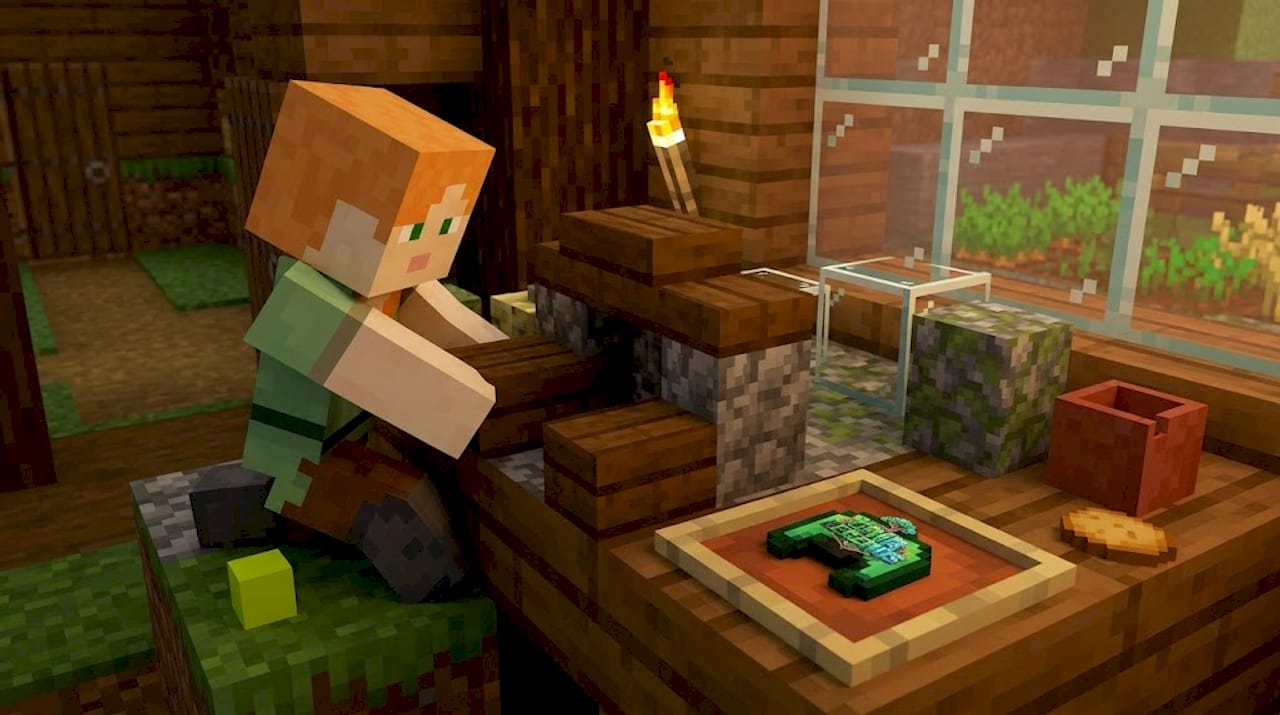
Lighting is where many new players fall short. Torches prevent mob spawns by raising the light level above 7. In the Overworld, hostile mobs spawn at light level 0 through 7, so keeping every surface at level 8 or above stops them cold.
| Location | Torch spacing | Priority |
|---|---|---|
| Shelter interior | Every 6 blocks | Critical |
| Base perimeter | Every 7 blocks | High |
| Mining tunnels | Every 8 blocks | High |
| Surface around base | Every 10 blocks | Medium |
Light your base perimeter as soon as you have enough coal and torches. Mobs that spawn outside your walls will still path toward you, so a lit perimeter reduces the threat significantly.
Pro Tip: Torches on the right-hand wall while mining let you navigate back to the surface easily. Follow the torches on your left side and you'll always find your way out.
Secure reliable food and plan for long-term survival
Now that you're safe from mobs, let's tackle hunger, which can be as dangerous as any zombie if ignored. Your hunger bar depletes faster than most new players expect, especially when sprinting. Once it hits zero, you start losing health.
Here's how to build a reliable food supply from day one:
- Hunt animals immediately. Cows, pigs, sheep, and chickens all drop meat. Kill a few before nightfall.
- Cook your meat. Raw food restores hunger, but cooked food restores significantly more saturation. A cooked porkchop restores 8 hunger points versus 3 for raw.
- Collect seeds and apples. Break tall grass for seeds and punch oak leaves for apples. These are your bridge crops.
- Plant wheat as soon as possible. Wheat is the most versatile early crop. It also lets you breed cows and sheep for a sustainable food loop.
- Make a bed early. Sleeping skips the night cycle entirely and resets your spawn point. This is one of the highest-value actions in early survival.
Securing food sources early by hunting animals for cooked meat and gathering seeds sets you up for a sustainable food loop that requires almost no effort once established. Aim to have a bed crafted by the end of day one.
Sprinting is the biggest hunger drain in early survival. You move faster, but your hunger bar drops noticeably. Walk when you're close to base and only sprint when you need to escape or cover large distances quickly. This single habit can extend your food supply by 30 to 40 percent in the early game.
Pro Tip: Build a small animal pen near your base using fences and a gate. Lead two of each animal inside using their preferred food (wheat for cows and sheep, carrots for pigs) and breed them. You'll have a permanent, renewable meat supply without hunting.
For staying nourished and safe long-term, transitioning from hunting to farming is the key milestone. Once you have a wheat farm and an animal pen running, hunger becomes a non-issue and you can focus entirely on mining and progression.
Mine smarter for resources and avoid deadly mistakes
With food secured, you can focus on resource expansion, which means smart mining and staying alive underground. Mining is where most players die unnecessarily, usually from lava or falling into a ravine they didn't see coming.
Here's the right way to approach underground mining:
- Always carry a water bucket. Lava is everywhere below Y=0 and a water bucket can save your life and your items.
- Never dig straight down. You can fall into a cave, a ravine, or directly into lava. Always dig in a staircase pattern.
- Mine at Y=-58. Optimal diamond generation post-Caves and Cliffs update peaks around this level, making it the most efficient depth for strip mining.
- Use strip mining with 2-block-tall tunnels spaced 3 blocks apart. This pattern exposes the maximum number of blocks per tunnel without wasting effort.
- Light every tunnel as you go. Darkness behind you means mobs can spawn and follow you out.
"Diamonds at Y=-58 aren't just a tip, they're the difference between iron armor and full diamond gear in the same play session."
| Mining method | Best depth | Diamond efficiency | Risk level |
|---|---|---|---|
| Strip mining | Y=-58 | Very high | Low |
| Cave exploration | Y=-50 to -64 | High | High |
| Branch mining | Y=-54 | Moderate | Low |
| Ravine mining | Variable | Moderate | Medium |
For building resource progression beyond diamonds, iron is your most important early metal. Smelt every iron ore you find and prioritize iron armor before going deep. Full iron armor reduces incoming damage by about 60 percent, which is the difference between surviving a creeper explosion and losing everything.
Pro Tip: Label your chests back at base before a long mining session. When you return with a full inventory, you'll drop items in the right place immediately instead of sorting through a chaotic pile of cobblestone and ore.
For underground navigation safety, always note your coordinates before descending. Press F3 on Java Edition to see your exact XYZ position. Write down your base coordinates or set a waypoint if your client supports it. Getting lost underground with a full inventory of diamonds is one of the most frustrating things in survival mode, and it's entirely preventable.
Choosing between Minecraft Java and Bedrock: Which version suits your playstyle?
Beyond gathering, building, and mining, your overall survival strategy might depend on the edition you choose. Both versions of Minecraft are excellent, but they serve different players in different ways.
Java is better for mods and Hardcore, while Bedrock excels at crossplay and performance. The Wither boss is also noticeably harder in Bedrock, which matters for players pushing into late-game content.
| Feature | Java Edition | Bedrock Edition |
|---|---|---|
| Mod support | Extensive | Limited |
| Crossplay | No | Yes (PC, console, mobile) |
| Hardcore mode | Yes | No |
| Redstone mechanics | More precise | Slightly different |
| Performance | Higher system demand | Better optimized |
| Wither difficulty | Standard | Harder |
Here's how to think about choosing the right Minecraft version based on playstyle:
- Builders and redstone engineers generally prefer Java. The more precise redstone behavior and access to technical mods like Litematica and Create give you tools that Bedrock simply can't match.
- Explorers and server players often find Bedrock more convenient. Crossplay means you can join friends on console or mobile without everyone needing the same platform.
- Hardcore survival players need Java. Hardcore mode, which locks you to one life and deletes the world on death, only exists in Java Edition.
- Casual players and newcomers may find Bedrock more accessible due to better performance on lower-end hardware.
Pro Tip: If you're unsure which version to start with, consider who you want to play with. If your friends are on console, Bedrock is the practical choice. If you want access to the full modding ecosystem and technical gameplay, Java is worth the investment.
Both versions receive the same major content updates from Mojang, so you won't miss out on new biomes, mobs, or items regardless of which you choose. The differences are primarily in technical gameplay and community features.
What most survival guides miss: Playstyle, risk, and thriving beyond day one
Most survival guides, including well-meaning ones, treat Minecraft like a checklist. Get wood. Build shelter. Mine diamonds. Win. But that framing misses something important: no two players survive the same way, and that's actually the best part of the game.
Builders find joy in the base itself. The mining is just a means to an end. Explorers thrive on discovering new biomes and structures, often taking risks that a builder would never consider. Redstone engineers are playing an entirely different game inside the same world, one focused on automation and logic rather than combat or aesthetics. Each of these playstyles faces different challenges and gets different rewards from the same mechanics.
Here's the part conventional wisdom gets wrong: risk-taking is not just acceptable, it's often where the best moments happen. Venturing out at night with a sword instead of sleeping, diving into a ravine for exposed ores, or pushing into the Nether before you feel fully ready, these choices create the stories you actually remember. Safe play keeps you alive. Bold play makes the game worth talking about.
For progressing your playstyle beyond the basics, the real goal is not just avoiding death. It's building a world that reflects how you actually want to play. The survival tips in this guide are a foundation, not a ceiling. Use them to get stable, then play your way.
Level up your survival skills with Gaia Legends guides
If you're ready to put these strategies into action and deepen your expertise, Gaia Legends has even more in-depth guidance and community support waiting for you. We publish five guides every day covering survival techniques, build design, combat strategies, item progression, and server recommendations, all grounded in real experience from running a 200-player SMP.

Whether you're a new player still figuring out your first shelter or a dedicated grinder pushing toward full netherite, our Minecraft tips and guides cover every stage of the journey. You can also follow the full complete survival progression path we've mapped out, which takes you from day one basics all the way through boss encounters and advanced automation. The community is active, the guides are updated regularly, and there's always something new to learn. Come explore what's possible.
Frequently asked questions
What is the best first tool to craft in Minecraft survival?
The wooden pickaxe should be your first crafted tool, allowing rapid upgrade to more durable stone tools. Stone tools are significantly more durable than wooden ones and should be your immediate next step.
How can I prevent mobs from spawning in my Minecraft shelter?
Use torches and ensure every interior block has a light level above 7 to prevent hostile mob spawns. Torches prevent spawns at light levels 0 through 7 in the Overworld, so consistent placement is essential.
Where should I mine to find diamonds fast in Minecraft 2026?
Mine at Y=-58 for the best chance at finding diamond ore in the latest updates. Optimal diamonds post-Caves and Cliffs are found at this depth, and strip mining there is the most efficient method.
Which is better for survival mode: Minecraft Java or Bedrock edition?
Java offers more mods and Hardcore mode, while Bedrock enables crossplay and better performance. Java excels for mods and Hardcore, but Bedrock is the practical choice if you want to play with friends on different platforms.